
Our inaugural reading list offers five books about money, discipline, habits, resilience and perspective — ideas that can help when professional life gets demanding and the world around us gets increasingly noisy.
There is no shortage of advice about becoming more successful.
Our phones deliver it constantly. Podcasts promise better routines. Social media offers financial advice, productivity hacks and morning rituals. Artificial intelligence can summarize a lifetime of business lessons in seconds.
And yet, there remains something uniquely valuable about spending several hours with one good book and one well-developed idea.
That is the premise behind The Reading List, a new recurring feature in Vegas Legal Magazine.
Each issue, we’ll recommend a handful of books we believe are worth your time. Some will be about business or money. Others may explore history, psychology, leadership, health or personal development. Occasionally, we’ll recommend something simply because it’s a great book, such a great novel or biography. No rules, just good books we feel are worth your time reading.
We’re starting with five books that address a challenge almost every ambitious professional eventually encounters:
How do you remain motivated, financially grounded and optimistic without allowing the pressures of success — or the chaos of the world around you — to consume you?
These five books offer very different answers.
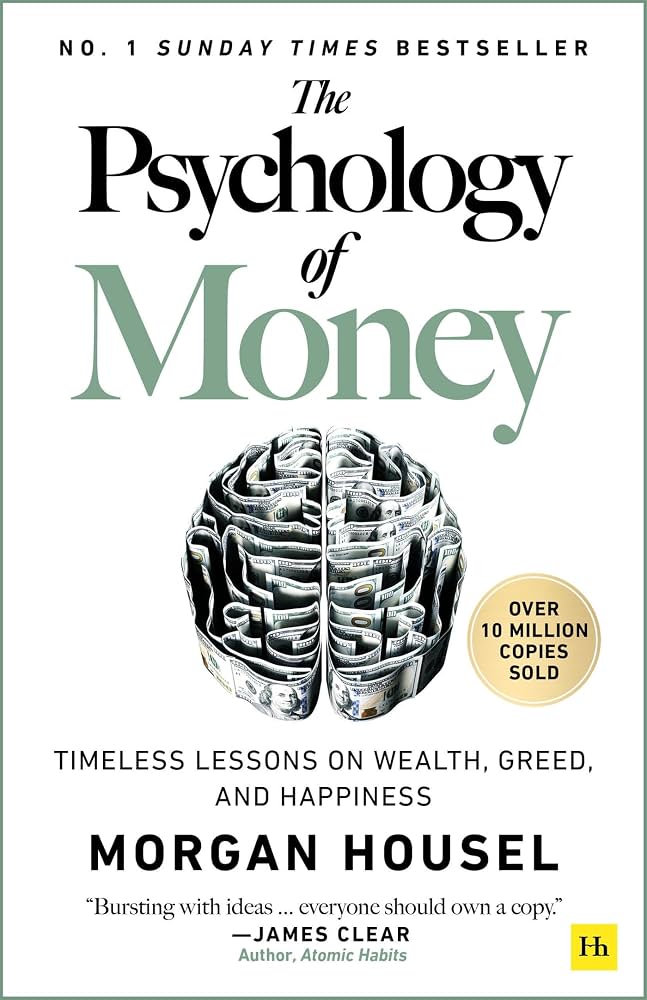
1. The Psychology of Money by Morgan Housel
READ THIS FOR: MONEY & PERSPECTIVE
Morgan Housel’s The Psychology of Money isn’t really about how to invest. It’s about how people behave around money. Housel uses 19 short stories to explore why intelligence alone doesn’t determine financial success and why our individual experiences have such an enormous influence on how we perceive wealth, risk and opportunity.[1]
That distinction becomes increasingly important as a career progresses. Early financial goals tend to be straightforward: earn more, save more and accumulate assets.
Success eventually introduces more complicated questions: How much is enough? How much risk is worth taking when you already have something to lose? At what point does spending more stop meaning living better? And what exactly is all the money supposed to accomplish?
One of Housel’s most compelling ideas is that the greatest benefit money can provide isn’t necessarily a bigger house or a better car. It’s control over your time. The ability to decide what you do, when you do it and whom you do it with may be one of the highest forms of wealth. For professionals accustomed to measuring progress with numbers, that is a valuable change in perspective.
THE TAKEAWAY: Getting wealthy and staying wealthy require different skills. Financial success is as much about temperament and behavior as intelligence.
START HERE? Yes. If you read only one book from this list, we’d begin with this one.
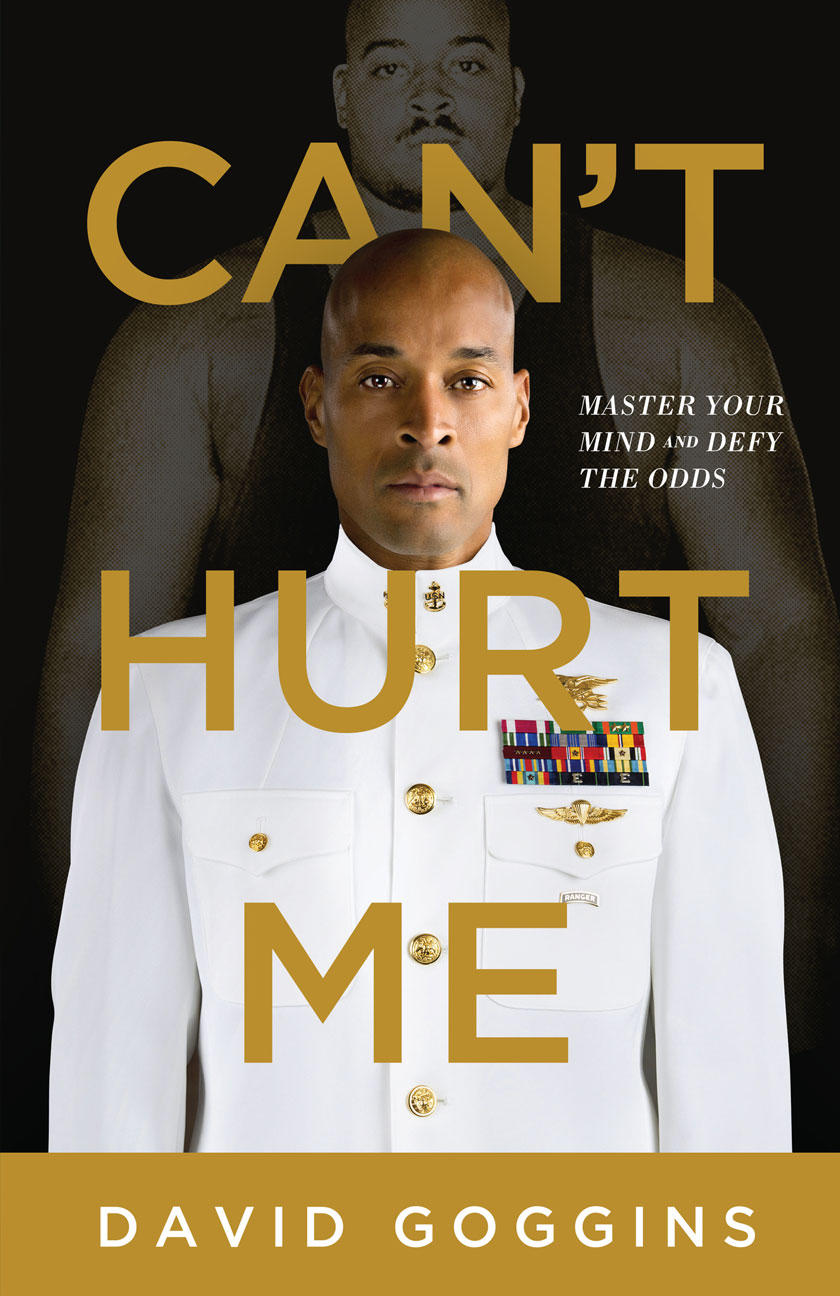
2. Can’t Hurt Me by David Goggins
READ THIS FOR: DISCIPLINE
David Goggins is not particularly interested in making the reader comfortable. That’s the point.
In Can’t Hurt Me, Goggins recounts an extraordinarily difficult childhood and his transformation from an overweight young man working as an exterminator into a Navy SEAL and elite endurance athlete.[2] His larger argument is that most people stop themselves long before reaching their actual limits.
Goggins calls this the 40% Rule — his belief that when the mind begins telling us we’re finished, we often have considerably more capacity remaining.[2]
You don’t have to run an ultramarathon or adopt Goggins’ extreme training regimen to understand the usefulness of the concept. Anyone who has built a business, practiced law, raised a family or pursued a difficult goal knows the feeling of wanting to quit before something is actually impossible. That is where Goggins draws an important distinction between motivation and discipline.
Motivation feels great, but it is temporary. Discipline is doing what needs to be done after the feeling disappears.
THE TAKEAWAY: You are probably capable of considerably more discomfort, effort and persistence than your mind initially tells you.
WHO SHOULD READ IT: Anyone going through a difficult stretch professionally or personally — or anyone who suspects life has become a little too comfortable.
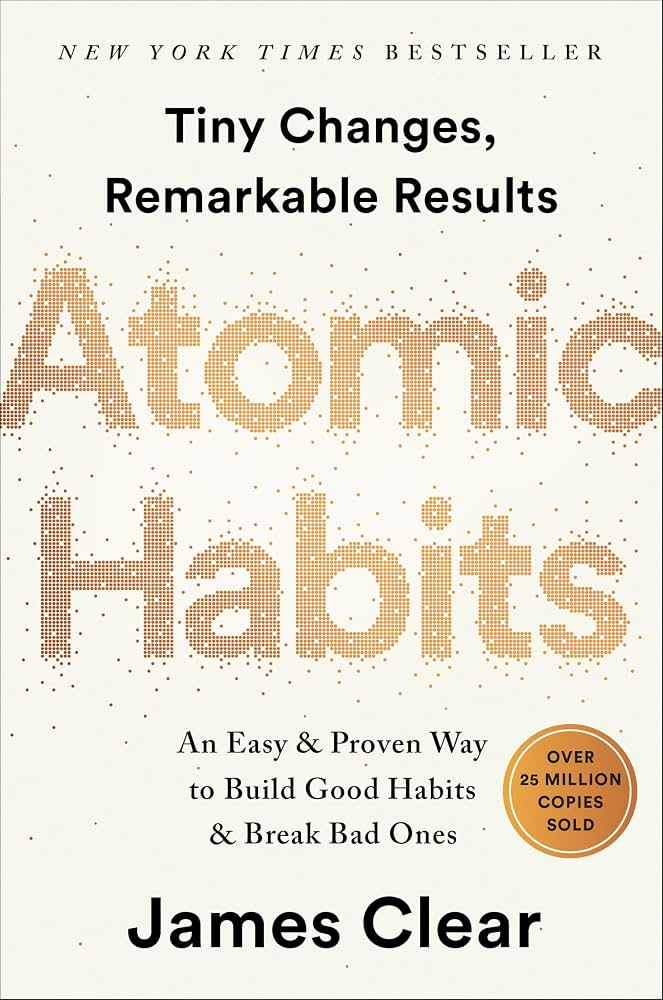
3. Atomic Habits by James Clear
READ THIS FOR: CONSISTENCY
Most of us already know what we should be doing: Exercise more. Read more. Save more. Eat better. Spend less time staring at a phone. Get to bed earlier.
Knowing isn’t usually the problem. Doing it consistently is.
James Clear’s Atomic Habits approaches self-improvement from that perspective. Rather than obsessing over ambitious goals, Clear argues for creating systems that make small positive behaviors easier to repeat.[3]
His framework emphasizes making good habits obvious, attractive, easy and satisfying while making unwanted habits more difficult.[3] The power of the approach comes from compounding. A single workout accomplishes very little. One healthy meal doesn’t transform your health. Reading 20 pages tonight won’t make you dramatically smarter tomorrow. Repeated hundreds of times, those insignificant actions become something else entirely.
Clear also encourages readers to think beyond outcomes and toward identity. Don’t merely set a goal to read 20 books. Become a reader. Don’t simply try to exercise three times this week. Become someone who doesn’t miss workouts. The difference sounds semantic until you begin applying it.
THE TAKEAWAY: You don’t necessarily need more motivation. You may need a better system.
TRY THIS: Pick one thing you’ve been trying unsuccessfully to accomplish and make the behavior required to begin it ridiculously easy.
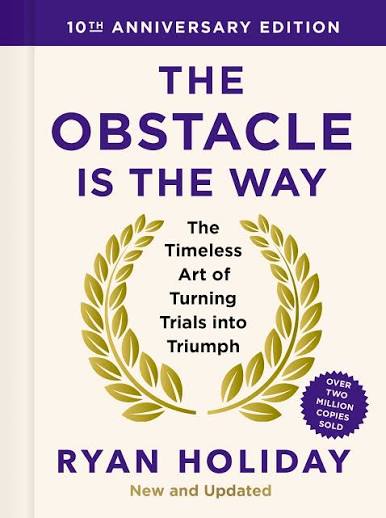
4. The Obstacle Is the Way by Ryan Holiday
READ THIS FOR: RESILIENCE
Things are going to go wrong. Clients leave. Investments lose money. Cases are lost. Employees disappoint us. Businesses struggle. Plans fail. Economies turn.
Some problems can be fixed. Others simply have to be endured.
The Obstacle Is the Way draws upon the ancient philosophy of Stoicism to examine how we respond when circumstances refuse to cooperate.[4]
The philosophy doesn’t require pretending that bad outcomes are good. Instead, it encourages separating circumstances we can influence from those we cannot.
You cannot control the economy. You can control how much debt you assume.
You cannot control another person’s behavior. You can control your response to it.
You cannot guarantee the outcome of a case or business decision. You can control your preparation.
It’s an extraordinarily simple concept that becomes surprisingly difficult to practice when the problem is actually happening to you. That may explain why ideas originating thousands of years ago continue finding an audience among modern executives, athletes, entrepreneurs and professionals. The circumstances have changed. Human nature hasn’t.
THE TAKEAWAY: Stop wasting energy demanding that reality be different. Determine what remains within your control and act on it.
KEEP THIS ONE: This is a book worth returning to when something goes wrong.
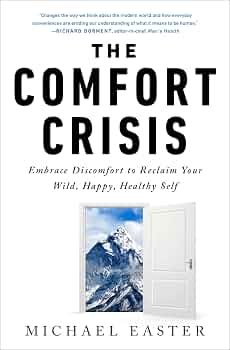
5. The Comfort Crisis by Michael Easter
READ THIS FOR: GETTING UNCOMFORTABLE
Modern life has become remarkably good at eliminating discomfort.
We control the temperature of our homes. Food arrives at our doors. Entertainment is available instantly. GPS prevents us from getting lost. Elevators save us the stairs. Nearly every inconvenience has a product or service designed to remove it.
Michael Easter’s The Comfort Crisis asks whether we may have become a little too successful at making life easy. Easter explores the idea that humans evolved in environments filled with physical exertion, uncertainty, hunger, boredom and discomfort — conditions that modern life increasingly allows us to avoid. His argument isn’t that comfort is bad. It’s that occasionally choosing difficulty may be good for us.
That idea becomes particularly interesting after you’ve achieved some measure of success. Early in life, challenges tend to find you. You’re trying to establish a career, pay the bills, build a business, raise a family or prove yourself professionally. There is plenty of uncertainty whether you want it or not. Success can gradually remove some of those pressures. The better life gets, the easier it becomes to arrange things so that very little is genuinely difficult.
Easter suggests deliberately putting some difficulty back. That doesn’t require climbing a mountain or disappearing into the wilderness. It might mean attempting something you’re bad at. Taking the difficult trip instead of the easy vacation. Training for something that scares you. Learning a language. Spending time without your phone. Or simply becoming more willing to be bored, uncomfortable and uncertain.
There is a useful paradox in that idea. We spend much of our lives working to make things easier. Occasionally choosing something hard may be one of the things that makes the easier life worth having.
THE TAKEAWAY: Comfort is wonderful. Just don’t become so good at avoiding discomfort that you also begin avoiding growth.
TRY THIS: Choose one thing this year that is difficult enough that you’re not completely certain you can do it.
Leave a Comment